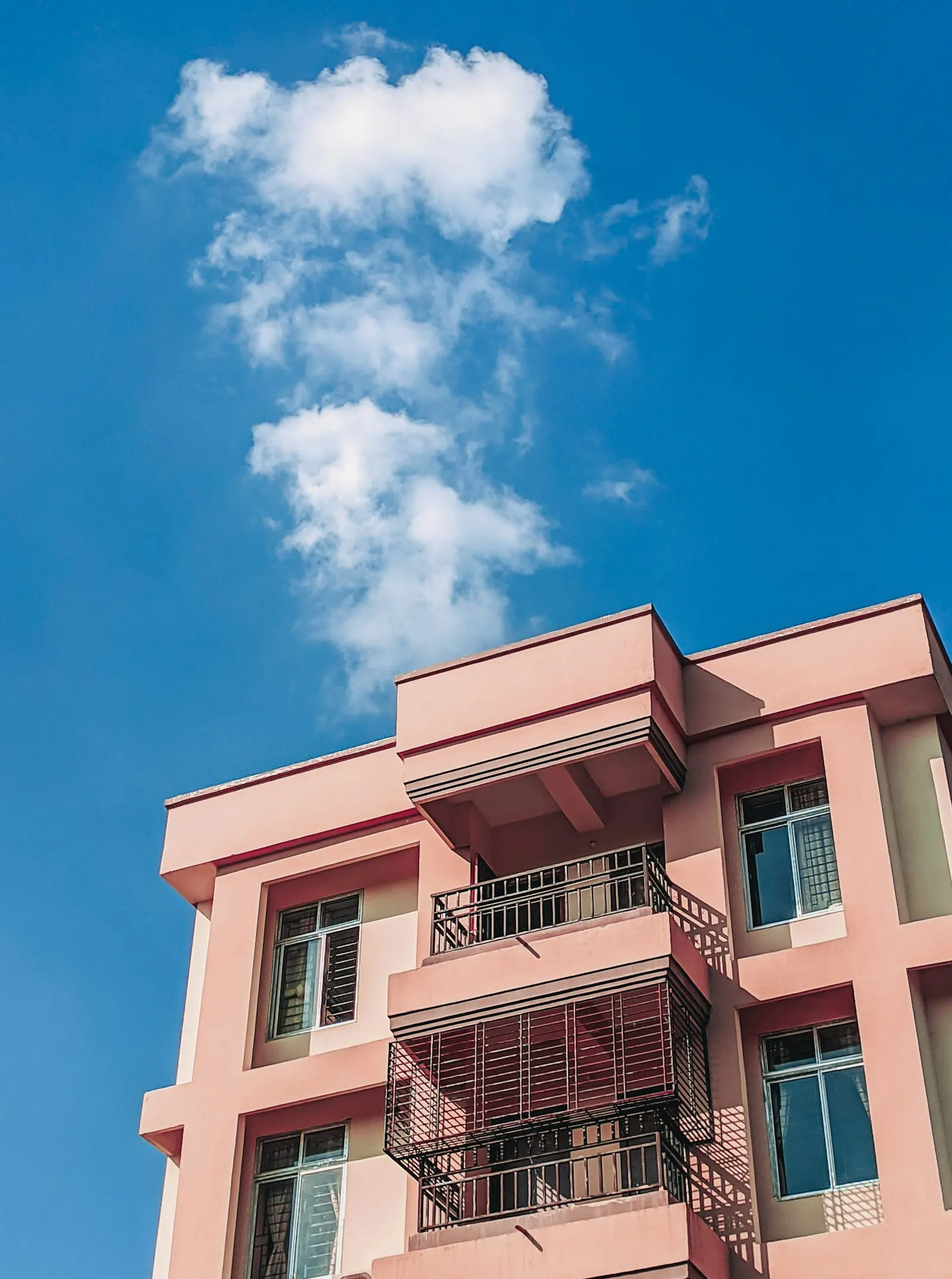
Short answer: On 22 September 2026 the Supreme Court, in its national case on unauthorised construction and misuse of residential property, directed authorities to seal, in the first instance, any premises in an area shown as residential that is being used commercially. A pending court case over title, or any other dispute, will not stop the sealing if the use breaks the purpose for which the land was allotted and the plan was sanctioned. Wholly unauthorised structures can be sealed or demolished, and the matter returns on 23 November 2026.
A Pending Title Case Will Not Stop the Sealing of a Residential Flat Used as a Business, the Supreme Court Says
On 22 September 2026 the Supreme Court told the authorities in its national case on unauthorised construction to give priority to one thing: no commercial activity in areas shown as residential. Premises found in breach are to be sealed "in the first instance". A court case over the property, whether between private owners over title or between an owner and the government, will not stop the sealing if the use breaks the purpose for which the land was allotted and the plan was sanctioned. If your flat is let to a tenant who runs an office, a clinic or a coaching class from it, this is the order that reaches you.
The case
The order was made in Miscellaneous Application Diary No. 17103 of 2026 in Loganathan v. State of Tamil Nadu, arising from the Supreme Court's judgment of 18 February 2026 in SLP(C) No. 8044 of 2025. Justice Ahsanuddin Amanullah and Justice R. Mahadevan are hearing it as a part-heard matter. This is a record of proceedings, an order, not a judgment. It was passed on 22 September 2026, signed on 25 September 2026, and runs to 18 pages, the first ten of which list counsel.
We reported the earlier order in this case, of 4 August 2026, in the Supreme Court's crackdown on flats turned into businesses. The order of 22 September adds the directions below.
The directions
At paragraph 19 the Court told the authorities to give priority, for the present, to ensuring that no commercial activity takes place in areas earmarked only for residential use. Paragraph 20 sets out three directions:
- Residential areas. Where an area is shown as residential and the State Government's permission is for residential use only, no commercial activity is to take place. If it is found, the premises "shall, in the first instance, be sealed".
- Areas with no clear use. Where an area is not marked for residential or commercial use, mixed use may need consideration. For now the status quo is not to be disturbed, though proceedings on paper may continue.
- Pending disputes. Where a case is pending over a building or land, "whether between private individuals concerning title or any other dispute, or between the Government and the concerned party", the pendency "shall not come in the way of the Authorities sealing the premises" if its use breaks the purpose of the allotment and the sanctioned plan.
Paragraph 21 adds that a structure built wholly without approval can be sealed or demolished in accordance with law. Paragraph 22 warns that if the authorities are shown to take "any pick-and-choose approach", the Court will take a strict view.
On Bhopal, the amicus curiae told the Court that buildings were being sealed and then unsealed within hours or days with nothing in between, such as a reply to a show-cause notice (paragraph 23). The Court allowed a draft Master Plan for Bhopal, unrevised since 1995, to be published for objections, and said the test for any property is conformity with "the existing Master Plan and the applicable building bye-laws" (paragraphs 25 and 26).
What else the order records
- Site inspections have been carried out in Delhi and Lucknow. The amicus said the New Delhi Municipal Council had not cooperated, and the Additional Solicitor General assured the Court of full cooperation (paragraphs 4 and 5). The amicus is to file a final report by the next date (paragraph 6).
- The Municipal Corporation of Delhi filed its compliance report (paragraph 13).
- Tamil Nadu said about 260 cases had been disposed of. Its time to finish was extended to 7 November 2026 (paragraph 15).
- A contempt notice went to the Chief Secretary of Uttarakhand, whose State had not appeared, deposited Rs 50,000 or filed an affidavit (paragraph 16).
- The Jaipur Development Authority had issued notices to coaching institutes to shift to areas earmarked for them (paragraph 1).
- The matter is listed on 23 November 2026 at 2.00 p.m., with States to file status reports one week before (paragraphs 29 and 30).
What it means for an NRI owner
The directions are addressed to the authorities, and they act on the use of the premises, not on who owns them. A flat in a residential area that a tenant uses as a business can be sealed first, and a pending civil case over the flat is no bar. An owner abroad is often the last to know how a tenant is using the flat. Paragraph 20 names no city. The same order records work under way in Delhi, Lucknow, Jaipur, Bhopal and Tamil Nadu.
The order does not change the law on use of property in any city. It tells the authorities where to act first under the Master Plan and bye-laws that already apply. Areas without a clear use are left as they are for now.
Our guide on managing tenants from abroad covers what to put in a lease about permitted use and how to check it. For a flat left empty, see protecting a vacant flat, and before buying, legal due diligence for NRI buyers.
A notice about the use of your flat belongs with a lawyer in that city who can read the Master Plan and the notice.
FAQ
What did the Supreme Court order on 22 September 2026? It directed authorities to give priority to stopping commercial activity in areas shown as residential, and to seal such premises in the first instance. A pending case over title or any other dispute does not stop the sealing.
Does a pending civil case over my flat protect it from sealing? Not under this order. Paragraph 20(iii) says the pendency of a case between private parties over title, or between the government and a party, "shall not come in the way" of sealing if the use breaks the allotment and sanctioned plan.
What about areas with no clear residential or commercial use? For the time being the status quo is not to be disturbed, though proceedings on paper may continue.
Is this a final judgment? No. It is an order in a part-heard matter. The case is next listed on 23 November 2026.
Which case is this? Loganathan v. State of Tamil Nadu, Miscellaneous Application Diary No. 17103 of 2026, before Justice Ahsanuddin Amanullah and Justice R. Mahadevan.
66 MG Road newsdesk
Sources
- Supreme Court of India, record of proceedings, Loganathan v. State of Tamil Nadu, Miscellaneous Application Diary No. 17103 of 2026, arising from the judgment of 18 February 2026 in SLP(C) No. 8044 of 2025, Court No. 9, Item 304, Ahsanuddin Amanullah and R. Mahadevan JJ, order of 22 September 2026, signed 25 September 2026, 18 pages. The signed court PDF was downloaded on 29 September 2026 from the copy LiveLaw hosts, 75,773 bytes, sha256 beginning a1fed4ef60931f38, and read in full: https://www.livelaw.in/pdf_upload/2026/09/26/1710320262026-09-22-702679.pdf
- We did not reach the order on the Supreme Court's own website this run. The PDF carries the Court Master's and Assistant Registrar's signature blocks and the court's diary number on every page.
Information on this page is as on 2026-09-29. Rules, rates, deadlines and government portals change without notice, so verify against the official source before you act. This page is for information only. It is not tax or legal advice, and it is not a substitute for a qualified adviser who knows your position.